
Criminal Court Records in Owyhee County
A criminal court record is the official court file for a criminal case. In Owyhee County, that file is handled through Idaho's District Court system and its Magistrate Division. The clerk's court function is part of the office styled locally as Clerk of the District Court, Ex-Officio Auditor and Recorder. Criminal case files can include charging documents, case numbers, defendant and attorney information, plea entries, bond conditions, hearing notices, motions, warrants or failures to appear, judgments, sentences, probation terms, fines, fees, and docket entries.
Owyhee's court page lists District Court, Magistrate Criminal Court, Magistrate Civil Court, Juvenile/Child Protection Court, and Homedale Magistrate Court. Misdemeanors, infractions, and many traffic-related criminal matters usually run through the Magistrate Division. Felony cases may begin with preliminary proceedings in magistrate court and then proceed into District Court for felony-level proceedings. That means a single criminal matter can have early magistrate events and later district-level events, so the docket should be read chronologically.
The Owyhee County Prosecutor is the local charging authority for criminal cases. The Owyhee County Prosecutor page lists Christopher Topmiller as prosecutor and provides the office contact context for filed charges.
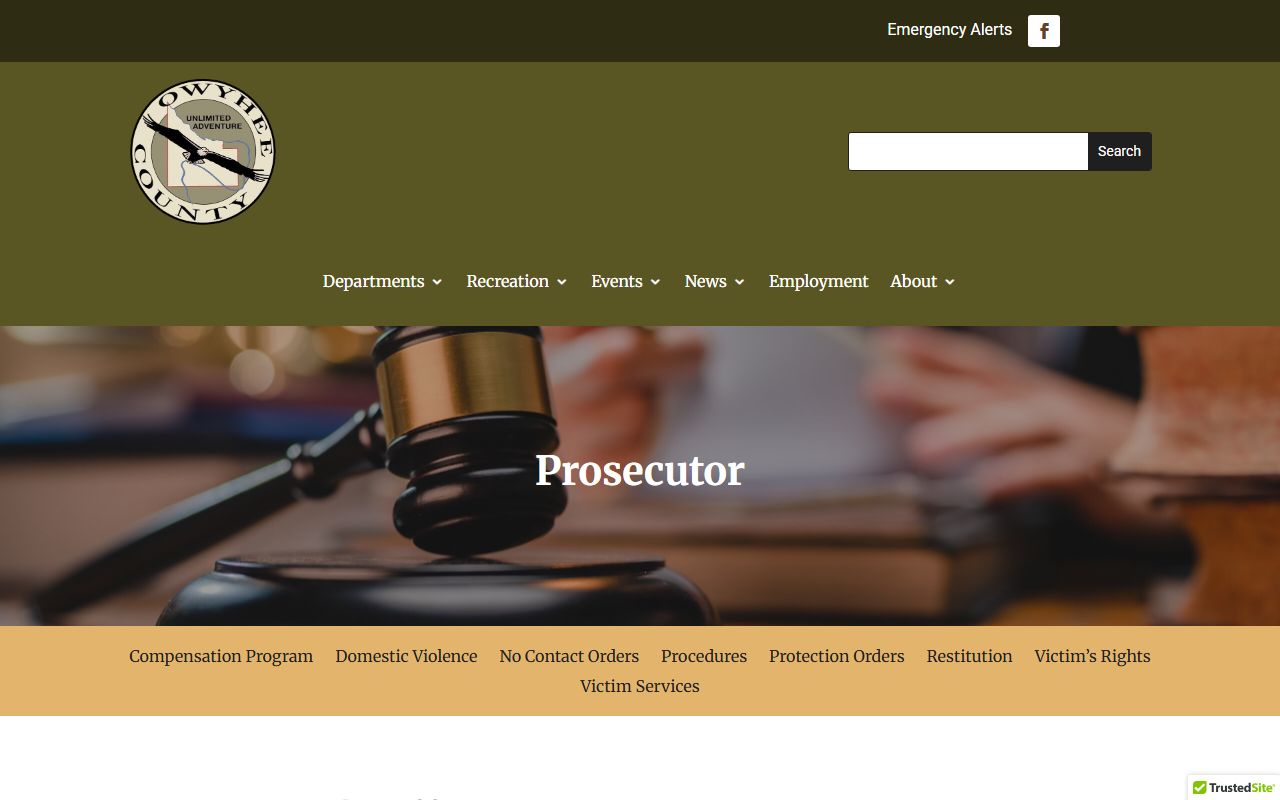
The prosecutor's role matters because a sheriff booking reason or arrest report is not the same as the formal court charge filed into the criminal case.
Search Owyhee County Criminal Records
Use Idaho iCourt Smart Search for public criminal case status and docket entries. Search by case number when available. If searching by defendant name, use Last, First Middle Suffix format or the separate last and first name fields. Expand Advanced Filtering Options, filter location to Owyhee County, and narrow by case type, case status, filing-date range, or judicial officer. Use iCourt Search Hearings for criminal hearing dates by choosing Owyhee - Criminal or Owyhee - All Case Types.
- Search iCourt by case number first because it avoids false matches.
- Use defendant name only when the case number is unknown, and apply Owyhee County as the location filter.
- Review docket entries for arraignment, pretrial hearings, motions, plea settings, disposition, sentencing, payment review, warrants, or probation events.
- Open hearing search when the question is when and where the next appearance is scheduled.
- Request copies, certified documents, regular audio, or FTR audio from Owyhee County Court when the public portal does not provide the file needed.
State criminal-history records are separate from the court case file. Idaho Code § 67-3004 governs criminal history records and is also relevant to limited shielding or non-conviction relief. The Idaho criminal history records statute is one source assigned to this page.
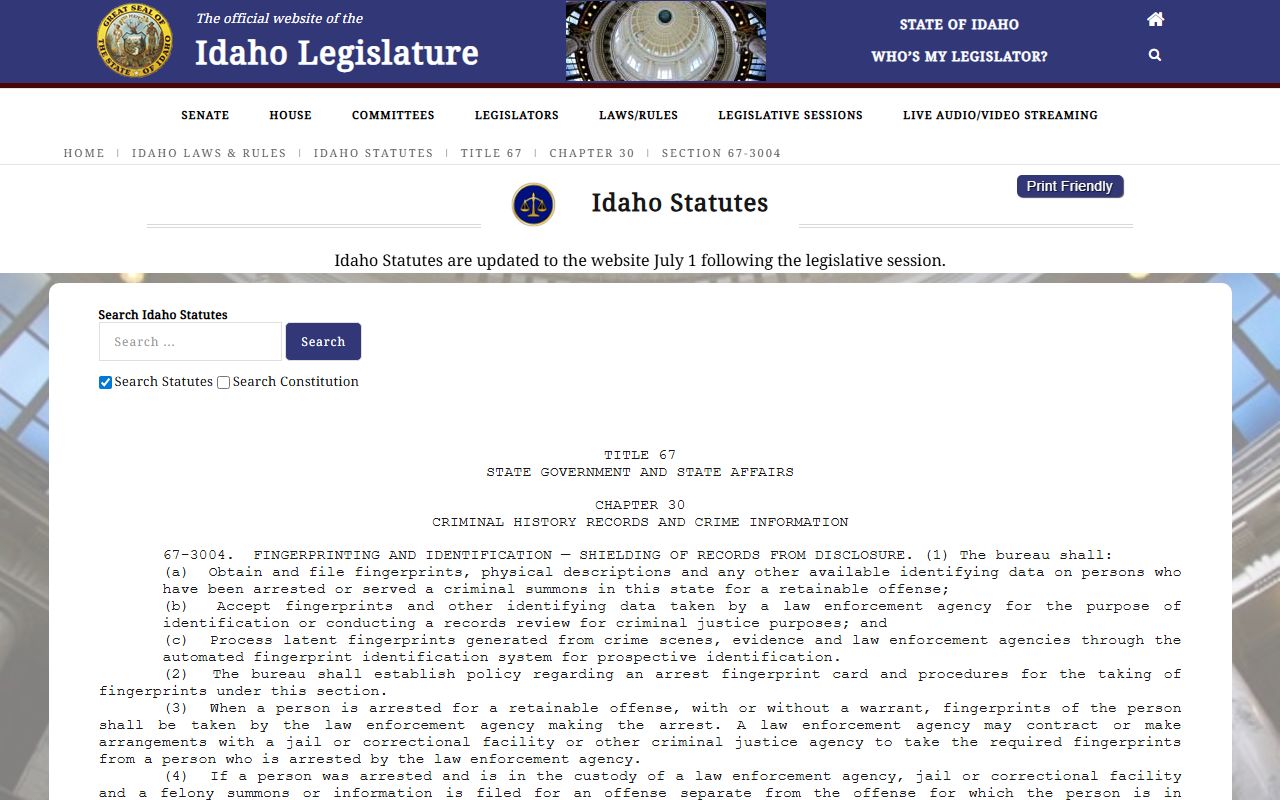
A criminal-history record can summarize justice-system history, but the Owyhee court case file is still the source for local pleadings, hearings, dispositions, and sentencing terms.
Stages of a Criminal Case
Criminal court records become easier to read when each entry is tied to a stage. Owyhee matters may start with an arrest, citation, complaint, or prosecutor filing. The court file then tracks appearances and rulings. A felony may have a preliminary phase in magistrate court before moving to District Court. Misdemeanors and infractions often remain in the Magistrate Division. Warrants, FTA entries, probation violations, and payment-review hearings can appear later if the defendant misses court, violates conditions, or fails to satisfy financial obligations.
Case flow: Charges Filed › Arraignment › Pretrial / Motions › Plea or Trial › Disposition › Sentencing › Post-Judgment Review
| Stage | What Happens |
|---|---|
| Charges Filed | The prosecutor files the formal allegation that opens or advances the criminal court case. |
| Arraignment | The defendant is advised of the charge and enters an initial plea or receives further scheduling. |
| Pretrial / Motions | Parties file motions, address discovery, negotiate, or prepare for trial. |
| Plea or Trial | The case resolves by plea, dismissal, acquittal, or trial verdict. |
| Disposition | The court records the outcome for each charge. |
| Sentencing | The court imposes jail, prison, probation, fines, fees, restitution, or other terms when there is a conviction. |
What Owyhee Criminal Records Show
Criminal court records can show both the pending procedural history and the final result. A public portal result may not include downloadable documents, so case numbers and docket details should be used to request copies from the court. The full record may also contain nonpublic components, including sealed material, juvenile information, protected personal identifiers, or redacted documents.
| Field | What It Shows |
|---|---|
| Case Number | The unique identifier used for iCourt lookup, clerk requests, and copy certification. |
| Defendant | The person charged, plus attorney information when public. |
| Charges | The filed allegations, which can be amended, reduced, dismissed, or resolved differently by count. |
| Bond / Conditions | Release terms, bond status, no-contact orders, or appearance requirements when entered. |
| Hearings | Arraignment, pretrial, motion, trial, disposition, sentencing, payment review, or probation-review dates. |
| Plea | Guilty, not guilty, or other plea entries, depending on case stage. |
| Disposition | The outcome of each charge, including conviction, dismissal, acquittal, or other resolution. |
| Sentence | Jail, prison, probation, fines, fees, restitution, community terms, or other court-ordered obligations. |
Charges vs. Convictions
A charge is an allegation filed in court. A conviction is an outcome that follows a guilty plea, verdict, or qualifying adjudication. Owyhee criminal court records may show charges that never became convictions because they were dismissed, amended, reduced, or resolved by another count. For arrest-to-charge detail, use the focused arrest records and court charges page. For custody status, use inmate records. For active warrant verification, use warrant records.
| Charge | Conviction | |
|---|---|---|
| Meaning | A formal accusation filed into the court case. | A finding or plea that establishes guilt for a charge. |
| Stage | Early or amended case stage. | Disposition and sentencing stage. |
| Record Risk | May remain visible even if later dismissed unless sealed or shielded. | Usually appears with sentence and financial obligations unless restricted. |
Reading Dispositions and Sentences
Read the disposition by charge, not just by case. One criminal case can include several counts, and each count can have a different result. A DUI count could resolve differently than a possession, paraphernalia, trespass, burglary, invalid driver's license, or failure-to-appear count. Owyhee's active warrant list shows common shorthand such as FTA for failure to appear, PV for probation violation, DUI, PCS or possession controlled substance, drug paraphernalia, invalid DL, DWP or DWS, open container, false logbook, fuel permit violation, motor carrier permit, and failure to stop at a check station. Those warrant-list terms can help interpret docket context, but the court disposition is the controlling case outcome.
Sentencing entries may include jail time, prison exposure, probation, suspended time, fines, fees, restitution, court costs, payment-review dates, no-contact orders, treatment, or other conditions. If an entry is unclear, request the judgment or sentencing order from the clerk rather than relying only on a docket label.
Prosecutor and Public Defender Context
The Owyhee County Prosecutor's Office is at 17082 Basey St., Murphy, ID 83650, phone 208-495-1153. The prosecutor decides which charges to file and prosecutes them in court. The office also lists a victim-witness coordinator contact through the county page. Public defense is now tied to the Idaho State Public Defender system. The Third Judicial District includes Adams, Washington, Payette, Gem, Canyon, and Owyhee counties, and the state page says Owyhee is covered through contractual public defender arrangements. Isaiah Govia is listed as Third District Public Defender.
Specialty-court context can also appear in criminal case records. The Third Judicial District treatment-court page lists Canyon County Felony Drug Court as serving Canyon and Owyhee County, with Hon. Matthew J. Roker as presiding judge and Mikell Torres as Drug Court Coordinator. Other Canyon specialty courts are listed by the district, but the research did not verify that each one serves Owyhee in the same way. For an Owyhee criminal file, treatment-court eligibility or referral should be confirmed through the court, prosecutor, defense counsel, or district treatment-court contact rather than assumed from a docket label.
The Idaho State Public Defender county offices page is the official public-defense source for Owyhee coverage.
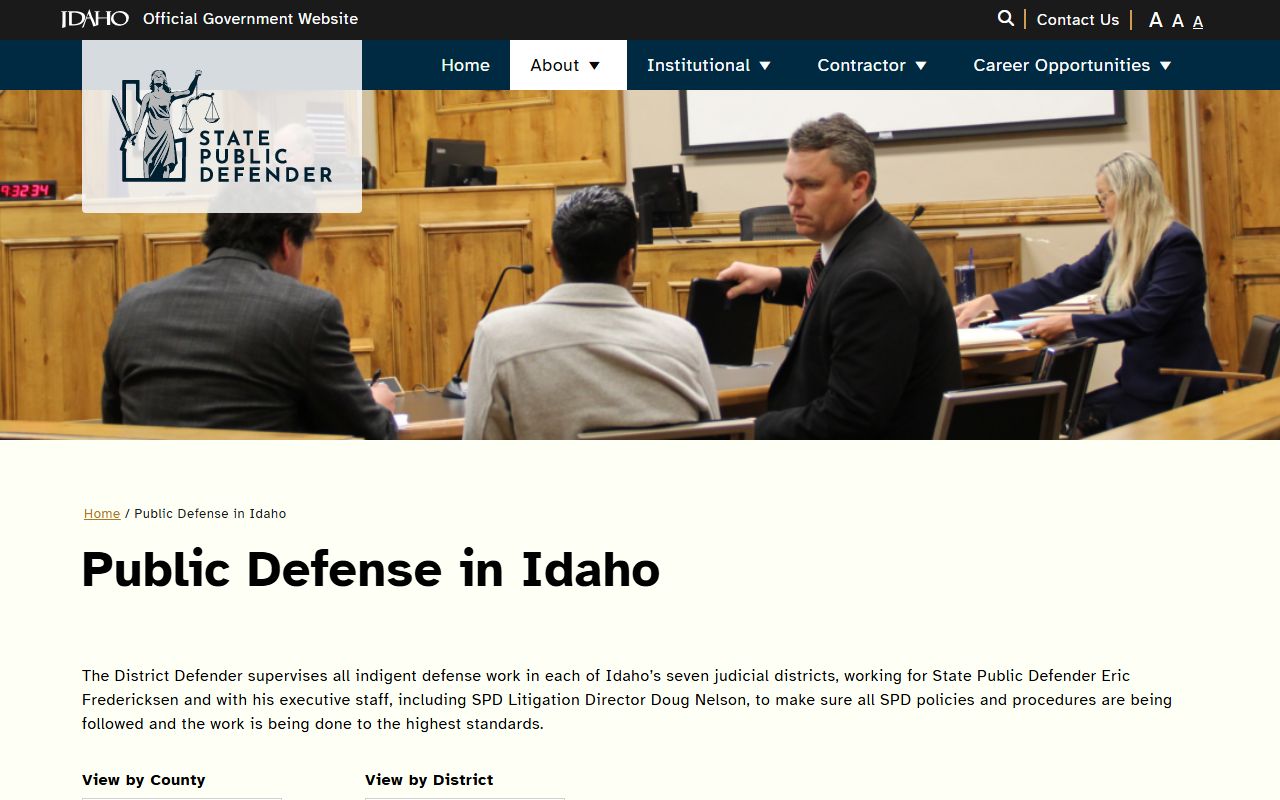
Defense contact information helps explain representation in a criminal court file, but public case records should still be requested from the court clerk.
The Idaho State Public Defender institutional offices page provides additional state public-defense office context.
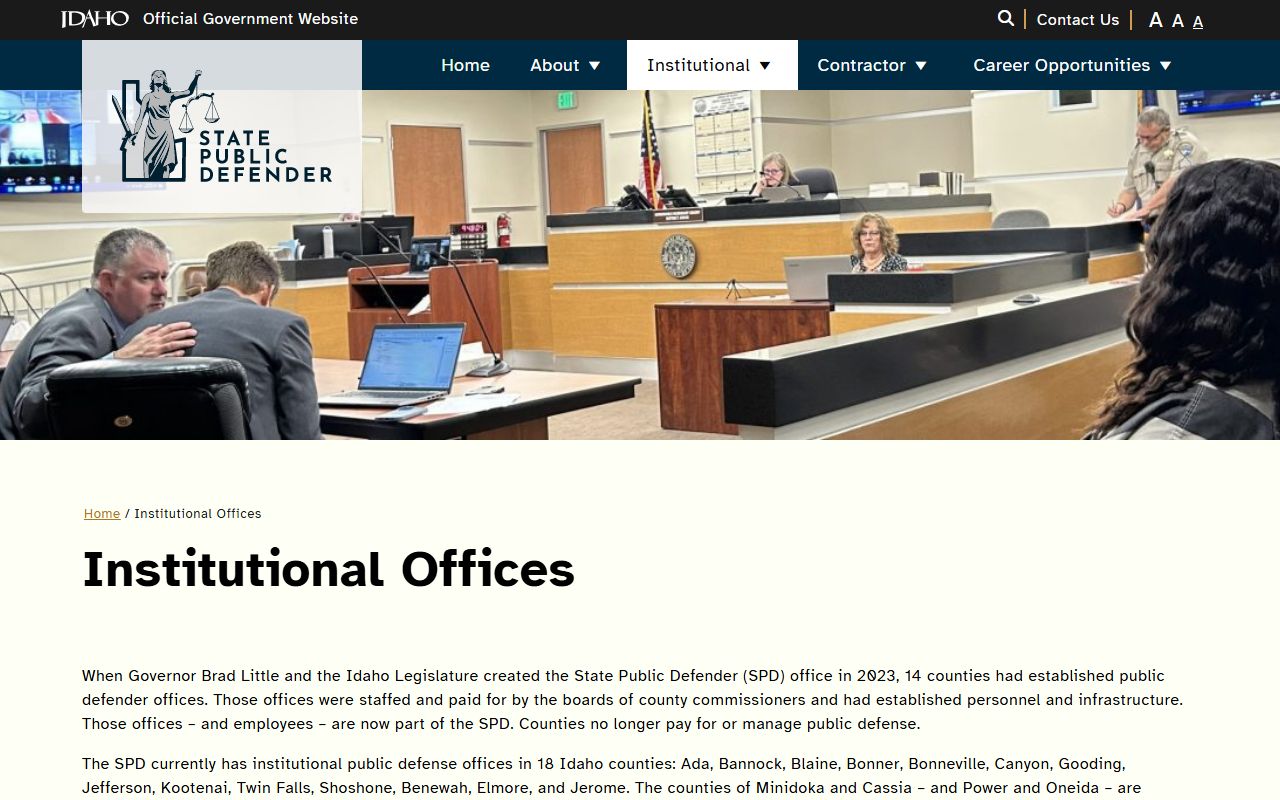
Statewide defense administration is separate from the Owyhee court docket, but it can affect who appears as appointed counsel in criminal cases.
Sealed vs. Shielded Criminal Records
Idaho uses sealing and shielding concepts more narrowly than many people expect. iCourt states that sealed cases and information exempt by court order or Idaho Court Administrative Rule 32 do not appear in portal results. Sealed case-event entries are not public, although orders to seal that accompany sealed records remain public. Idaho Clean Slate materials use the term shielding for eligible criminal records, and the research indicates shielding does not destroy the record. It prevents public access after the court grants relief.
| Sealed | Shielded | |
|---|---|---|
| Visibility | Hidden from public by court rule or order. | Public access is limited after court-approved Clean Slate relief. |
| Record Exists | Yes, but access is restricted. | Yes, shielding does not destroy the record. |
| Typical Path | Judge review, party status, rule-based confidentiality, or court order. | Eligibility request filed with the court that handled the case. |
| Owyhee Request Impact | Request form requires reason and relation to the case. | Users should avoid assuming broad expungement and use Idaho's official shielding process. |
Public Access to Criminal Court Records
Idaho Code § 74-102 supports public inspection and copying of public records unless an exemption applies. Idaho Court Administrative Rule 32 governs access to judicial records, including criminal court files, exemptions, redactions, sealing, and copying. Idaho Code § 74-105 is also important because law-enforcement and investigatory records can be exempt from disclosure, which is one reason a sheriff report may be treated differently from a filed court record.
Key Statutes:
Idaho Code § 74-102 - public records may be inspected or copied unless an exemption applies.
Idaho Code § 67-3004 - criminal history records have separate state rules from the court case file.
Background Check Considerations
A public criminal case lookup can be useful for personal research, case tracking, or requesting court copies, but it is not the same as an FCRA-compliant background check. Employers, landlords, insurers, lenders, and others using records for regulated eligibility decisions must follow the Fair Credit Reporting Act and any other applicable law. Court records can also be incomplete, sealed, shielded, updated after a continuance, or different from a criminal-history repository.
Important: Do not use casual court lookups as a substitute for legally compliant screening or official criminal-history procedures.
Restricted Criminal Court Records in Owyhee County
Juvenile and child-protection matters are not ordinary public criminal files. Sealed cases, shielded records, adoption or termination matters, mental-health components, protected identifiers, confidential informant material, and law-enforcement investigatory information may be withheld or redacted. If the public portal returns no result, that absence does not prove no case exists. Use the Owyhee judicial records request form and provide the reason, relation to the case, case number, and specific documents needed. The court can approve, deny, redact, or limit inspection to the courthouse under clerk supervision.